Throughout October, QAHS celebrated all things Theory of Knowledge (TOK) with TOKtober 2026, inspired by the musical Hamilton and its powerful reminder that history has its eyes on you. Across a month of activities, students were invited to think about the ways knowledge is created, shared, challenged and remembered, and to consider the role they play in shaping the stories of our time.
The celebrations brought TOK to life through a range of creative and thought-provoking events. Students put their historical knowledge to the test in the History Timeline Challenge, embraced the opportunity to dress as a thinker for TOK Dress Like a Thinker Day, and contributed to the History Capsule. The capsule invited students to nominate objects, ideas and experiences that capture what makes being a QAHS student in 2026 unique, creating a snapshot of our community for the future.
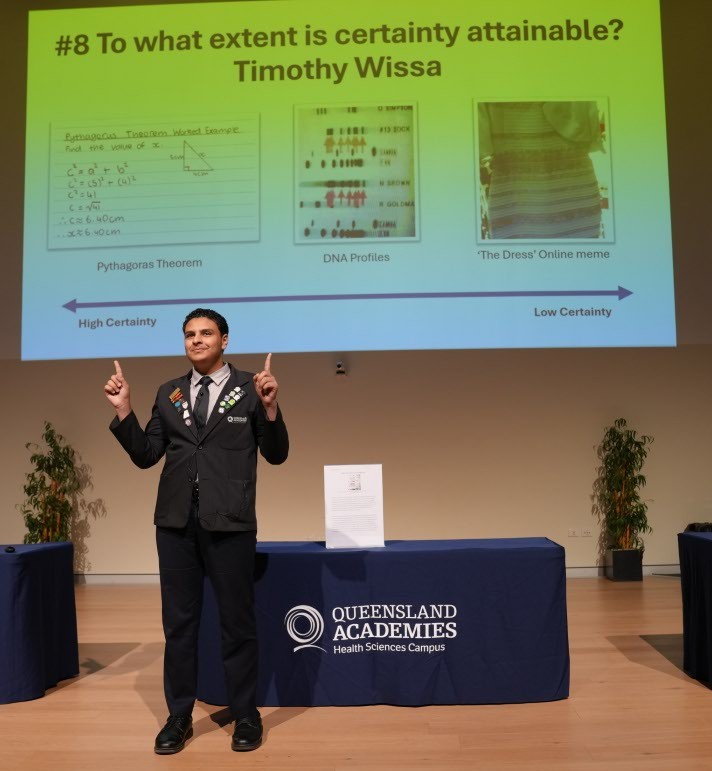
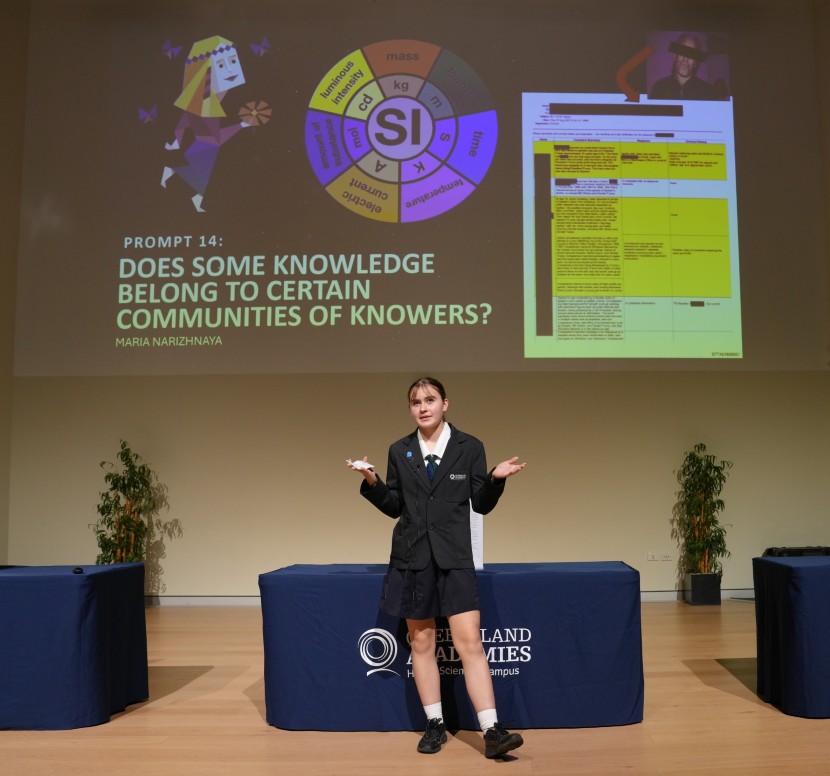
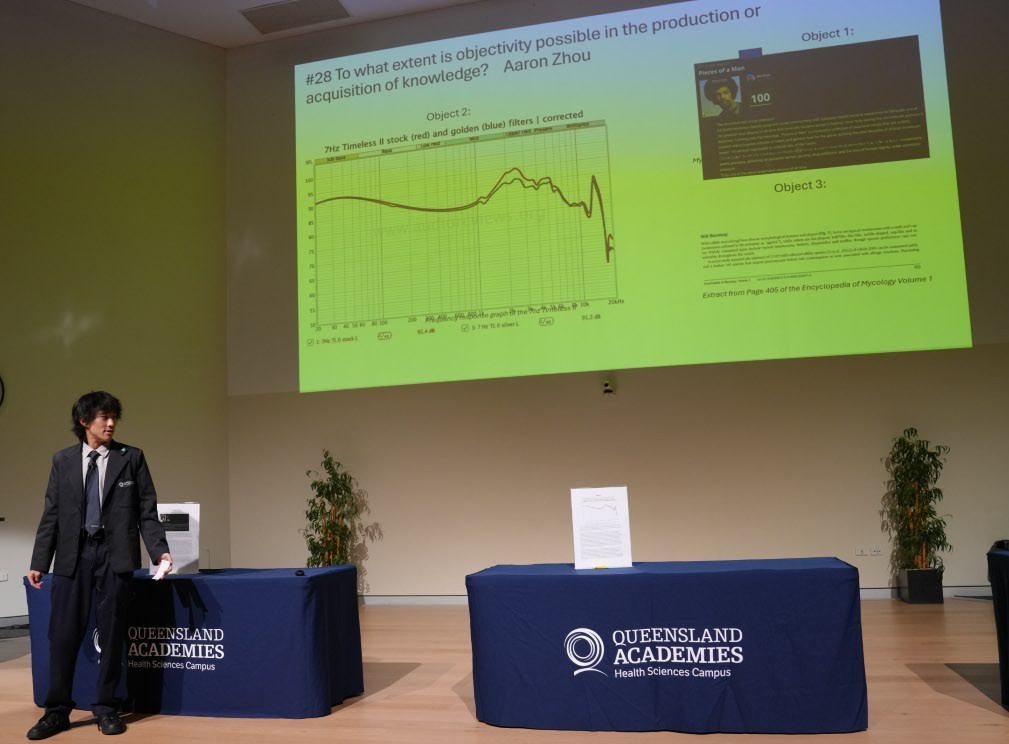
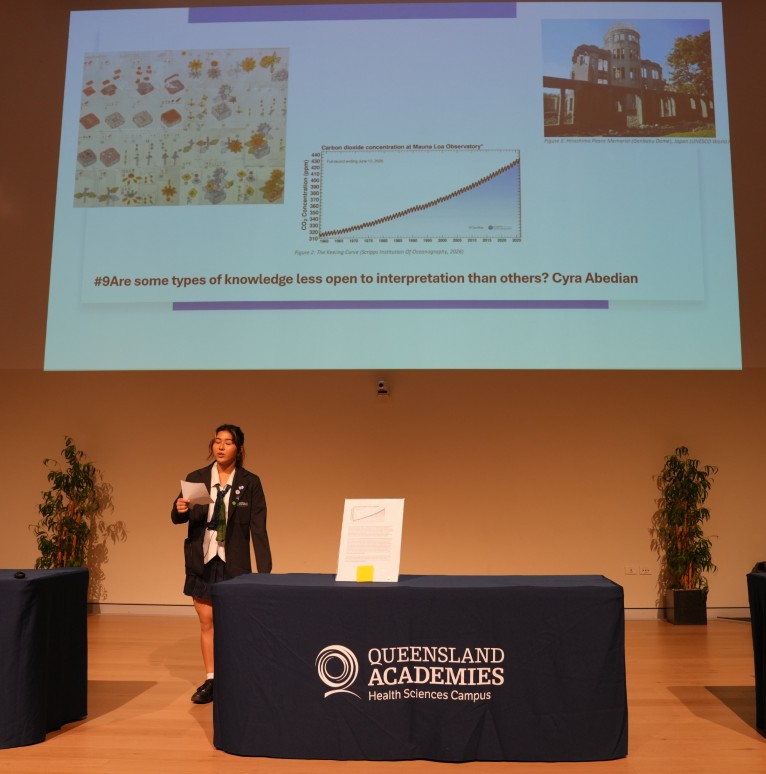
A highlight of the month was TOKtiks, our public-speaking event. In this two-minute oral presentation, students explored their chosen TOK Exhibition prompt through three carefully selected objects, demonstrating how everyday and significant objects can reveal different perspectives on knowledge. The event celebrated students' ability to communicate complex ideas with clarity, confidence and originality.
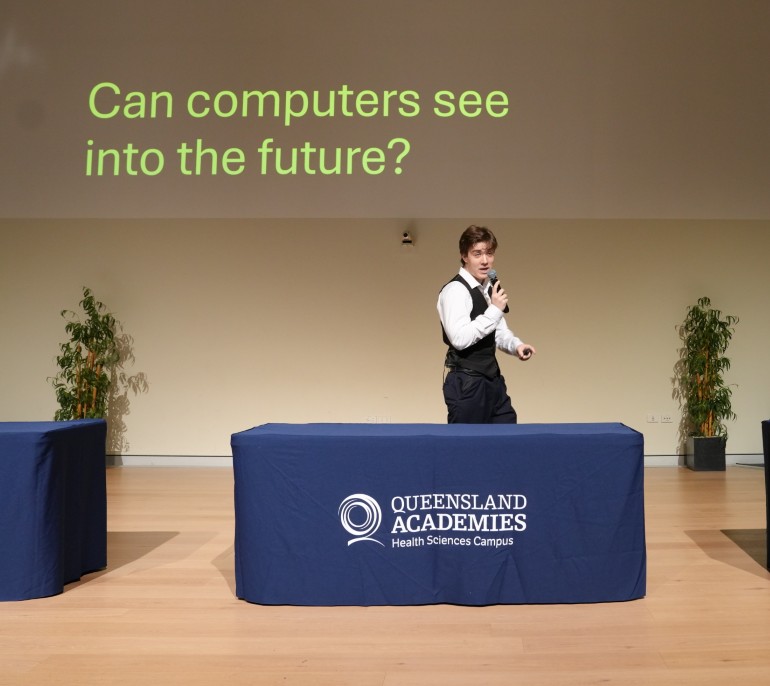
Year 10 and 11 students were also captivated by a special presentation from Alexander Francis, QAHS Alumnus (2024), who is currently studying a Bachelor of Computer Science/Master of Cyber Security at the University of Queensland. Alex shared the story of Alan Turing and explored the question of why humans seek to produce knowledge. His presentation prompted lively discussion, with students enthusiastically asking questions about Turing, the pursuit of knowledge and Alex's own journey from QAHS to choosing computer science as a career path. It was a wonderful opportunity for students to connect TOK questions with the experiences and aspirations of a former QAHS student.
Congratulations to our 2026 TOKtiks winner, Jean-Pierre Botha! Jean-Pierre explored the exhibition prompt “Should some knowledge not be sought on ethical grounds?" through three compelling objects, each presenting a different dimension of the ethical challenges involved in the pursuit of knowledge.
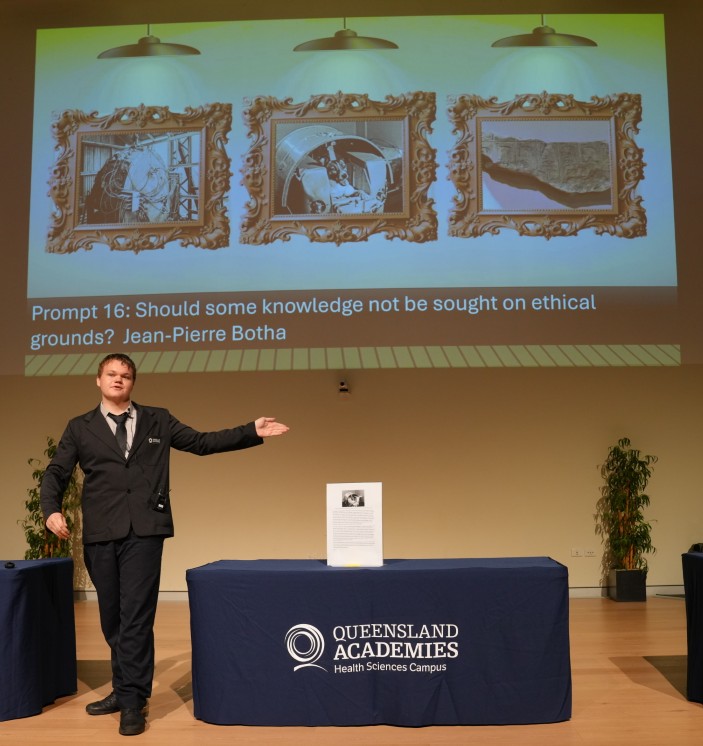
His first object was The Gadget, the first nuclear implosion device, developed and detonated as a test during the Manhattan Project. Jean-Pierre considered the tension between the scientific knowledge gained and the destructive purpose and potential of the technology, questioning whether the pursuit of such knowledge can be justified when its intended application involves significant harm.
His second object was Laika's life-support capsule, associated with the Soviet Union's Sputnik 2 mission in November 1957. Through this object, Jean-Pierre explored the ethical cost of scientific progress and the knowledge gained through animal experimentation. He considered whether the pursuit of knowledge that may advance science and improve human safety can justify the ethical challenges and suffering involved.
His third object was a fragment of the Pyramid Texts, excavated in Egypt and now held in a German museum. This object invited consideration of how ethical perspectives change over time. Jean-Pierre questioned whether knowledge acquired through historical practices that were once considered acceptable should continue to be pursued or valued without examining the ethical implications of the object's excavation, ownership and display.
Together, these objects demonstrated the complexity of the prompt: the pursuit of knowledge can produce extraordinary advances, but it can also raise difficult questions about responsibility, harm and whose perspectives determine what is ethical. Jean-Pierre's presentation was a fantastic example of the critical thinking, curiosity and thoughtful evaluation at the heart of Theory of Knowledge.
TOKtober has once again highlighted the important role of the IB Core in encouraging students to look beyond what they know and question how, why and at what cost knowledge is produced. As Hamilton reminds us, history has its eyes on us and TOK encourages our students to consider how the knowledge of today will shape the world remembered tomorrow.
Congratulations to TOK Coordinator, Mrs Julie-Anne Johnston, for her leadership in bringing this month of celebration to life and for creating such engaging opportunities for students to explore the vital role of Theory of Knowledge within the IB Diploma Programme.
Kary Stratton
Head of Department Contemporary Teaching and Learning