On the first day of Week 1, Term 4, our Year 11 Theory of Knowledge students launched into the IB Diploma Programme's Collaborative Sciences Project (CSP), an interdisciplinary project that brings students together in delegations to investigate real-world issues through scientific inquiry.
This year, students are exploring the thought-provoking question: To what extent is failure an essential part of the production of knowledge in the natural sciences?
The project challenges students to look beyond scientific discoveries and consider how knowledge is produced, tested, challenged and refined. Through an inquiry-based process, students investigate real-world scientific claims, draw connections across at least two sciences, evaluate evidence and consider the role of unexpected results, unsuccessful approaches and revised explanations in scientific progress.
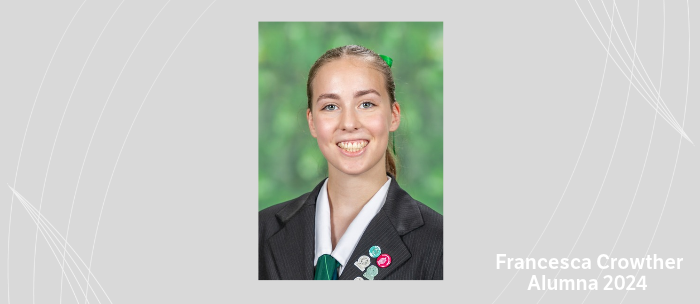
A highlight of the launch was a guest presentation from QAHS Alumna Francesca Crowther, who made a powerful real-world connection to the theme. Now studying Bachelor of Engineering (Honours) at The University of Queensland, Francesca provided students with an opportunity to connect their academic inquiry with experiences beyond the classroom. She shared her own experience of what failure means in physics, through her own Extended Essay experimentation.
Over the next four weeks, students will work collaboratively in delegations to investigate their chosen real-life situations and develop visual presentations that communicate their thinking process, evidence from the world of science and conclusions.
The CSP is a vital component of the IB Diploma Programme, designed to develop interdisciplinary understanding, as students work with others across a range of scientific disciplines. It fosters collaborative problem-solving and an appreciation of the environmental, social and ethical implications of science. At QAHS, this inquiry-based approach also reinforces the value of critical thinking, where students are challenged by one-another to take alternative perspectives and form evidence-based judgements.
By questioning what constitutes failure, and whether it is always necessary for scientific progress, students are encouraged to nurture skills of reflection and collaboration and evaluate the role of failure in the natural sciences, and beyond.
Kary Stratton
Head of Department Contemporary Teaching and Learning