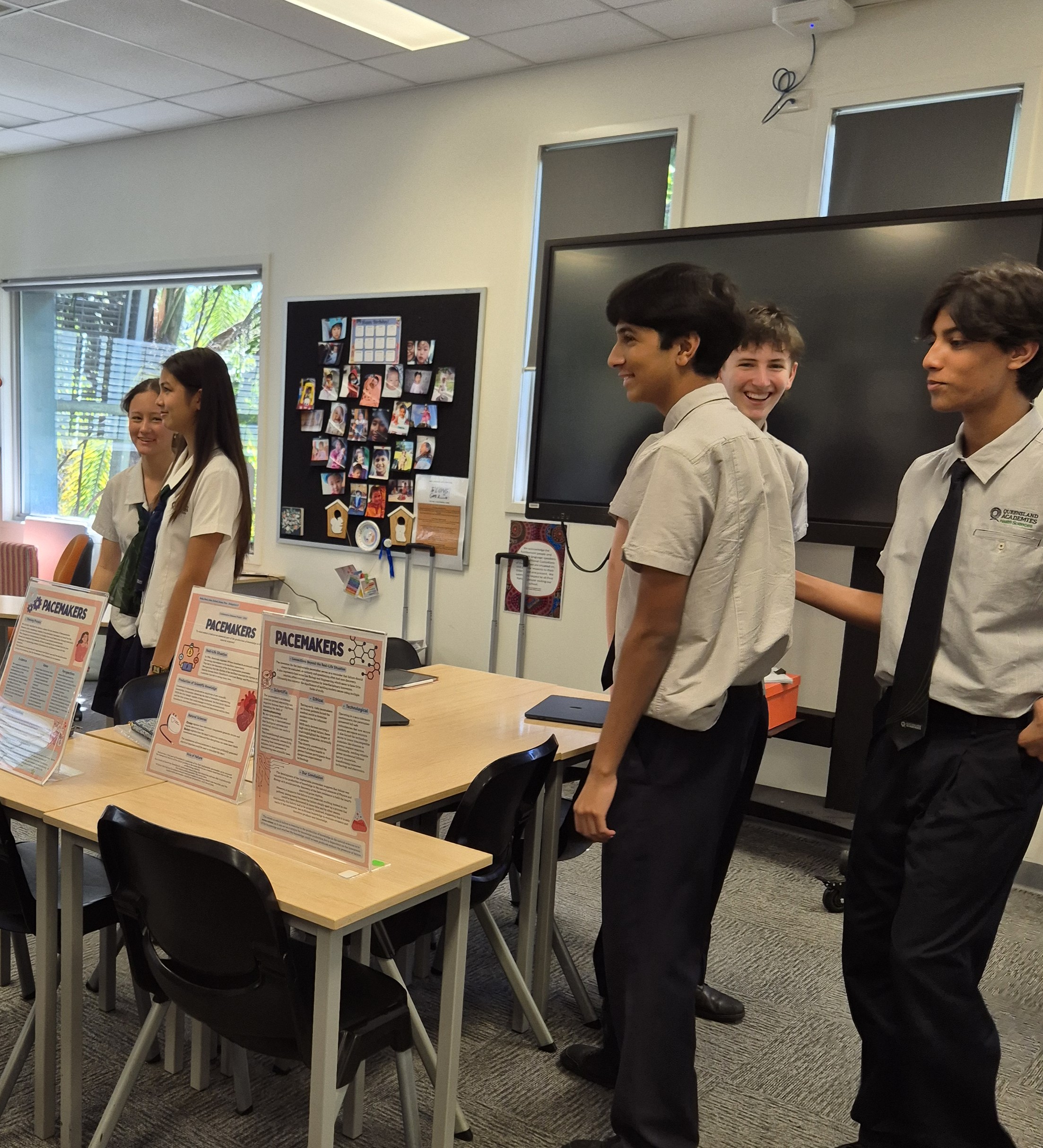
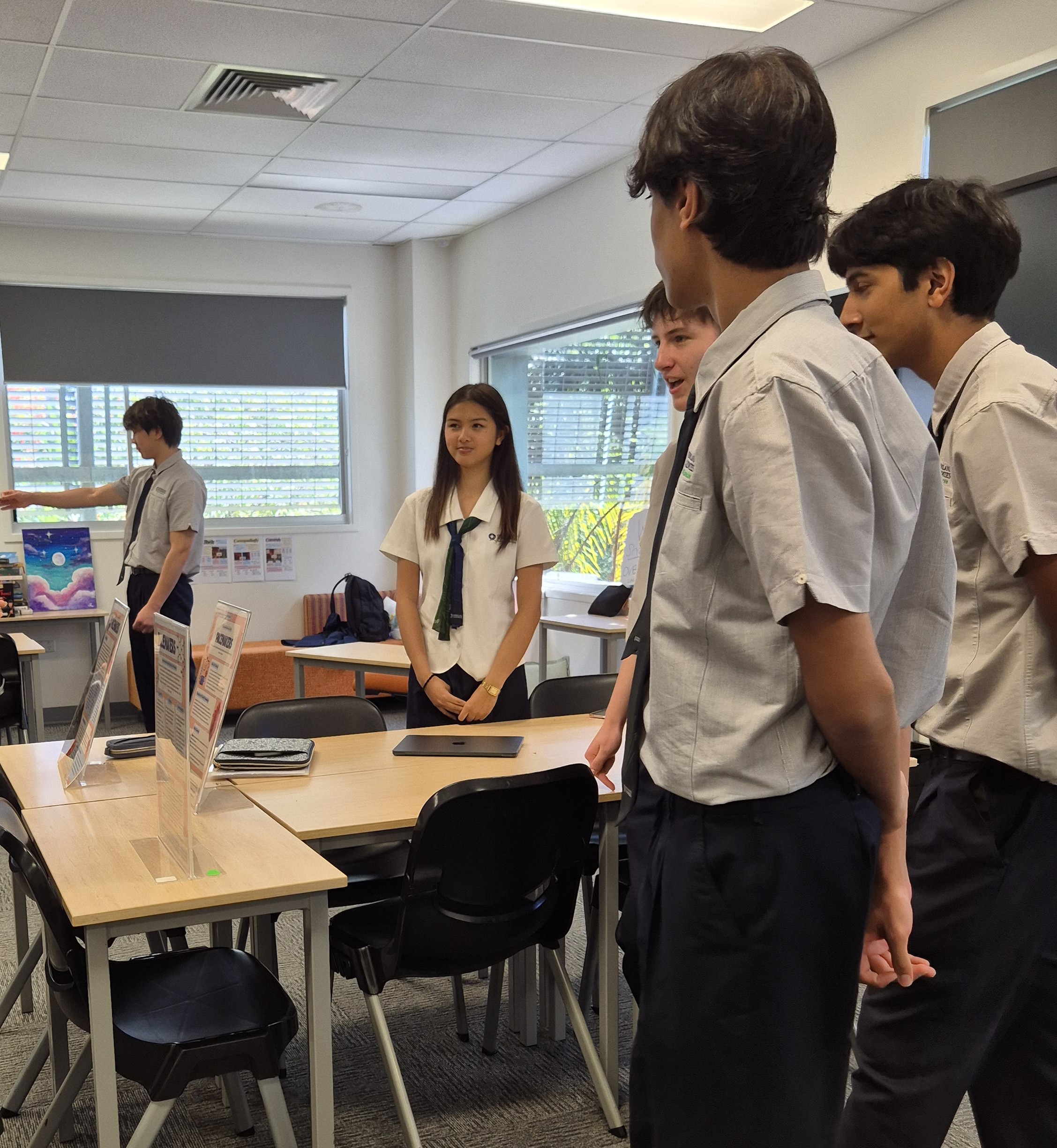
In Week 4, our Year 11 students brought their IB Collaborative Sciences Project (CSP) to life, exhibiting the findings of their investigations into the question: To what extent is failure an essential part of the production of knowledge in the natural sciences?
Working in collaborative delegations, students explored real-life scientific situations through the disciplines of two natural sciences. Their investigations examined how unexpected results, unsuccessful experiments and challenges to established explanations can contribute to the production, testing and refinement of scientific knowledge. The exhibitions also provided an opportunity for our Year 10 students to visit, ask questions and engage with the different ways scientists learn from what does not go to plan.
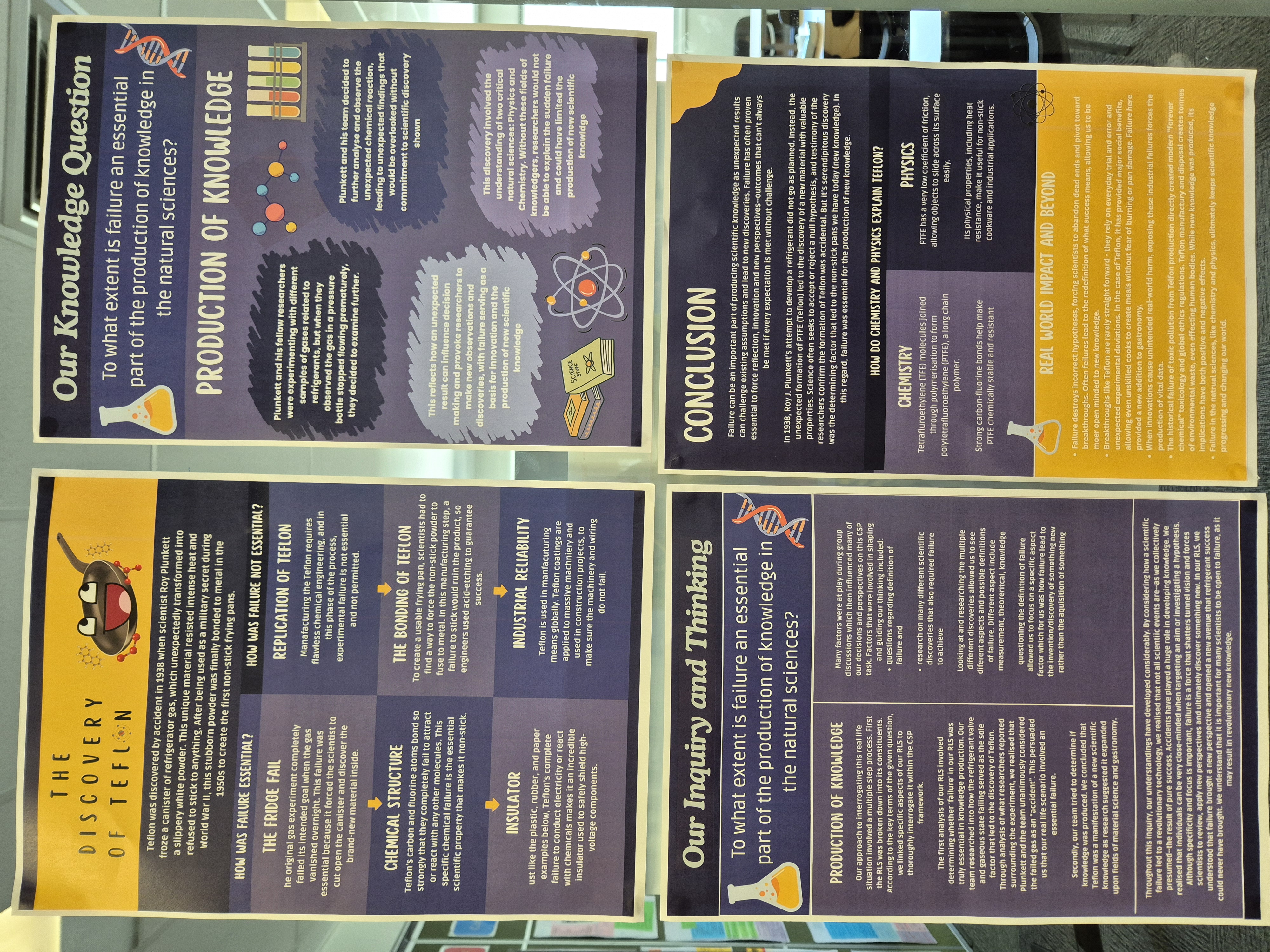
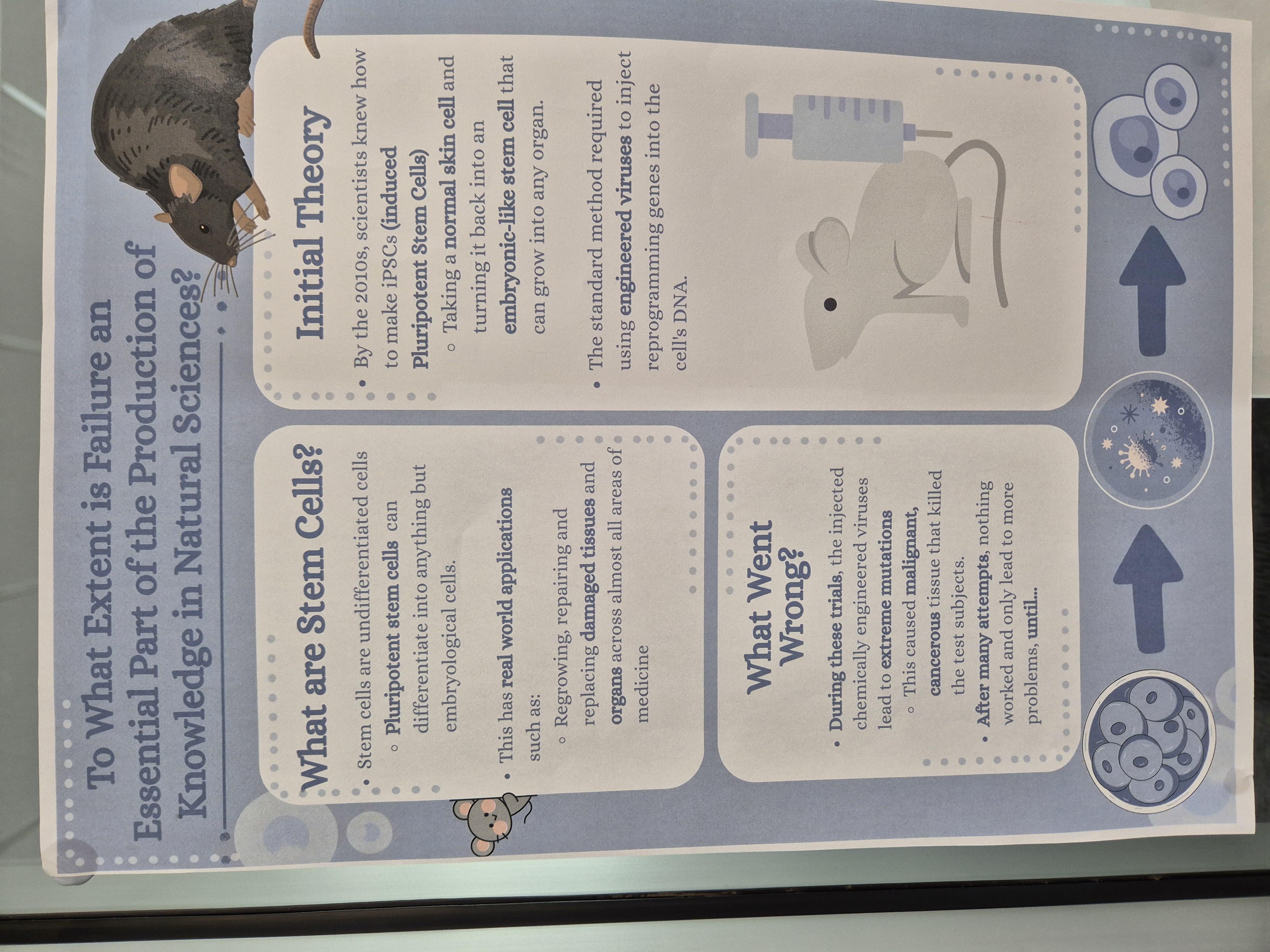
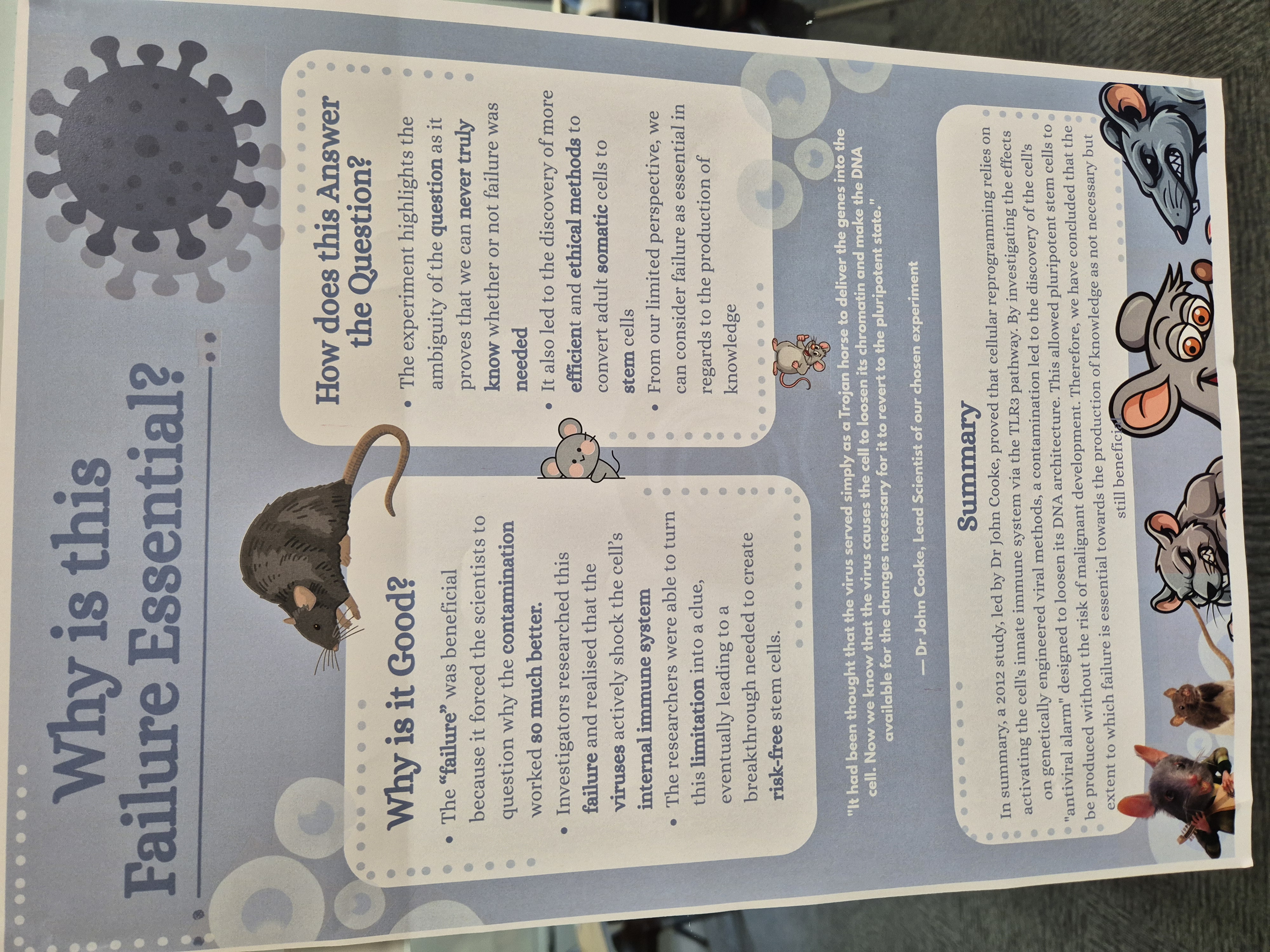
The diversity of the investigations highlighted just how many forms scientific failure can take. Three examples explored by students included:
Can bacteria use arsenic instead of phosphorus? Students investigated the discovery of GFAJ-1, a bacterium isolated from California's Mono Lake. Initial research suggested it could use arsenic in place of phosphorus in its cellular components. However, subsequent independent investigations challenged this conclusion, finding that the bacterium remained dependent on phosphorus. This case highlighted the importance of reliable methods, independent replication and being prepared to revise scientific claims when new evidence emerges.
How did unexpected DNA results help reveal its structure? Students explored the work of biochemist Erwin Chargaff, whose analysis of DNA from different species challenged the existing tetranucleotide hypothesis. His discovery that adenine and thymine, and guanine and cytosine, occur in matching proportions helped provide important evidence for the development of the double-helix model of DNA. This investigation demonstrated how unexpected results can challenge established thinking and open pathways to new scientific knowledge.
How did a failed cancer treatment become an important HIV medication? Students investigated the development of AZT (azidothymidine), initially explored by Jerome Horwitz in the 1960s as a potential treatment for cancer. When it proved ineffective in that context, the compound was set aside. Decades later, researchers investigated its potential against HIV, leading to its use as an important treatment. This example demonstrated how knowledge and technologies developed for one purpose can find new applications when scientists revisit earlier research and ask different questions.
These investigations encouraged students to look beyond the simple idea that scientists make mistakes and learn from them. Instead, they considered the different roles failure can play: challenging an accepted explanation, revealing limitations in research methods, prompting further investigation or creating opportunities for knowledge to be applied in new ways. Importantly, students were also challenged to consider whether failure was genuinely essential to the production of knowledge, or whether it was one valuable pathway among others.
The project exemplified the IB approaches to teaching and learning through its emphasis on inquiry-based learning, communication and collaboration. Students developed their understanding through questioning, evaluating evidence, considering alternative perspectives and sharing ideas within their delegations. The exhibition made this thinking visible and gave students an authentic audience with whom to communicate their findings.
It also reinforced QAHS's commitment to academic integrity and process over product. Through group discussion, individual contributions recorded on MyQA and the development of their own written Theory of Knowledge paragraph, students demonstrated not only what they had learned, but how they had arrived at their understanding. The assessed paragraph contributes 20% of students' Theory of Knowledge grade this semester.
The CSP is a powerful example of the IB Core in action. By connecting scientific investigation with the philosophical questions explored in Theory of Knowledge, students have been encouraged to think critically about how knowledge is produced, whose claims we accept and why the willingness to question and revise our understanding matters.
Congratulations to our Year 11 students for their thoughtful investigations and engaging exhibitions, and to the Year 10 students who participated so enthusiastically as an audience. Their questions and conversations were a fitting reminder that the production of knowledge is an ongoing, collaborative endeavour.
Kary Stratton
Head of Department Contemporary Teaching and Learning